
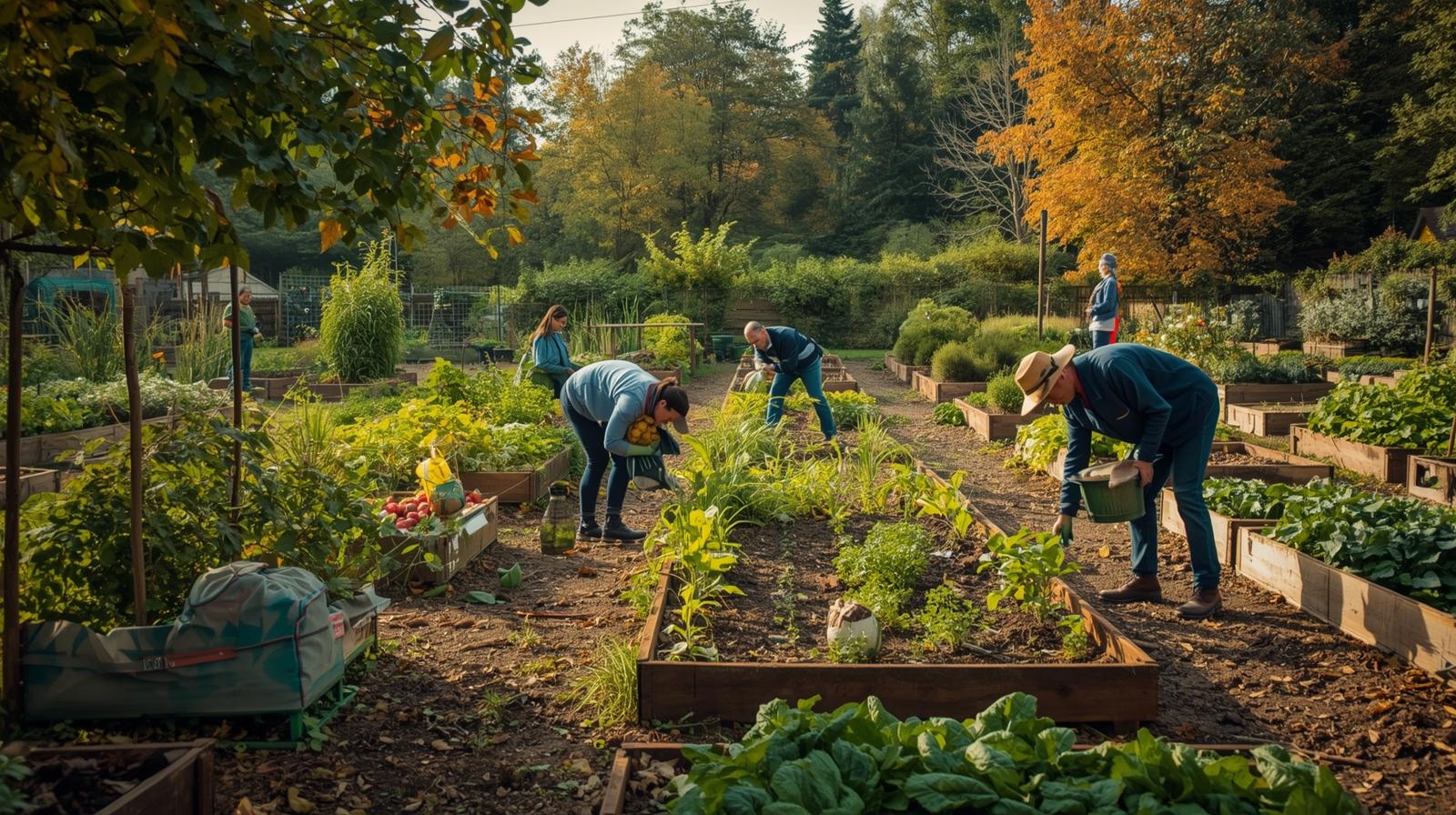
September is a month of change on the allotment and following the bountiful harvest in August, there are still plenty of September allotment jobs to complete. The days are getting shorter, the air cooler, and the pace of growth begins to slow. It’s a time to enjoy the final summer harvests while preparing the plot for autumn and winter. For beginners, September is about harvesting, clearing, sowing late crops, and caring for the soil to ensure next year’s success.
Harvesting and Storing Crops

- Vegetables: Beans, courgettes, sweetcorn, carrots, beetroot, onions, and maincrop potatoes.
- Fruits: Apples, pears, plums, blackberries, and autumn raspberries.
- Salads: Lettuce, rocket, and spinach can still be picked regularly.
- Herbs: Basil, parsley, mint, and thyme — harvest and dry or freeze for winter use.
Storing crops:
- Potatoes: Lift on a dry day, brush off soil, and store in paper or hessian sacks in a cool, dark place.
- Onions and garlic: Dry thoroughly in the sun or a shed before storing.
- Apples and pears: Store only unblemished fruit in single layers in a cool, ventilated space.
- Beans and peas: Freeze or dry for winter meals.
Beginner tip: Harvest regularly to prevent crops from becoming overripe or rotting. Always check for signs of disease before storing produce.
Clearing and Tidying the Plot

As summer crops finish, it’s time to clear old plants and tidy the allotment. This helps prevent pests and diseases from overwintering.
Tasks to do:
- Remove spent plants: Pull up old bean and pea plants, but leave the roots in the soil — they add nitrogen naturally.
- Weed thoroughly: Remove weeds before they set seed.
- Cut back overgrown herbs and perennials: This keeps them tidy and encourages healthy regrowth next year.
- Tidy paths and edges: Trim grass and clear debris to make the plot easier to manage in winter.
- Compost healthy plant material: Add old crops and weeds (without seeds) to the compost heap.
Beginner tip: Don’t leave bare soil exposed — cover it with compost, mulch, or a green manure to protect it from rain and erosion.
Soil Care and Bed Preparation

September is an excellent time to start improving the soil for next year’s crops.
Tasks to do:
- Add organic matter: Spread compost, well-rotted manure, or leaf mould over empty beds. The worms will work it in over winter.
- Sow green manures: Plants like clover, mustard, or phacelia protect the soil and add nutrients when dug in later.
- Test soil pH: Knowing whether the soil is acidic or alkaline helps plan what to grow next year.
- Plan crop rotation: Decide which crops will go where next season to prevent nutrient depletion and disease build-up.
Beginner tip: Avoid digging wet soil — it compacts easily. Work on dry days and use a garden fork to gently loosen the surface.
Sowing and Planting for Autumn and Winter

Although summer is ending, there’s still plenty to sow and plant for the colder months.
What to sow now:
- Leafy greens: Spinach, winter lettuce, rocket, and mizuna for autumn salads.
- Hardy crops: Spring cabbage, kale, and chard can be planted out now for winter and early spring harvests.
- Overwintering onions and garlic: Plant sets or cloves in well-drained soil for harvesting next summer.
- Broad beans and peas: Sow hardy varieties towards the end of the month for an early crop next year.
Beginner tip: Cover young plants with fleece or cloches to protect them from early frosts and pests.
Watering and Feeding

Although rainfall increases in September, some crops still need attention.
Tasks to do:
- Water regularly if the weather is dry, especially for late crops like courgettes and beans.
- Feed fruiting plants such as tomatoes and peppers until they finish cropping.
- Reduce watering for onions, garlic, and root vegetables as they mature to prevent rot.
- Mulch beds to retain moisture and suppress weeds.
Beginner tip: Water early in the morning or evening to reduce evaporation. Always water at the base of plants, not the leaves.
Pest and Disease Management

As temperatures drop, some pests decline, but others remain active. Keeping the plot clean helps prevent problems next year.
Common issues in September:
- Slugs and snails: Still active in damp weather — use organic pellets or traps.
- Cabbage white caterpillars: Check brassicas regularly and remove eggs or larvae.
- Blight: Continue to watch for brown patches on tomato and potato leaves; remove affected plants immediately.
- Mould and mildew: Improve airflow around plants and remove infected leaves.
Beginner tip: Regular inspections are the best defence. Catching problems early prevents them from spreading.
Greenhouse and Polytunnel Jobs

As nights cool, greenhouse management becomes more about protection and preparation.
Tasks to do:
- Harvest remaining tomatoes, cucumbers, and peppers.
- Remove old plants once they finish cropping and clean the greenhouse thoroughly.
- Ventilate on warm days but close doors early in the evening to retain heat.
- Check for pests like whitefly and aphids — clean glass and frames to remove eggs.
- Sow winter salads such as lettuce, spinach, and mustard greens under cover for a steady supply.
Beginner tip: Wash greenhouse glass inside and out to maximise light levels as days shorten.
Composting and Recycling

September is a great month to build up the compost heap with end-of-season plant material.
Tasks to do:
- Add green waste: Old crops, grass clippings, and vegetable peelings.
- Balance with brown materials: Dry leaves, cardboard, and shredded paper to prevent the heap becoming too wet.
- Turn the compost: Mix it to add air and speed up decomposition.
- Cover the heap: Use a lid or old carpet to keep warmth and moisture in.
Beginner tip: Avoid adding diseased plants or perennial weeds like bindweed — they can survive and spread when composted.
Planning Ahead

September is the bridge between summer abundance and winter rest — a good time to think ahead.
Tasks to do:
- Review the season: Note what grew well and what didn’t.
- Plan next year’s layout: Rotate crops and decide where to add compost or manure.
- Order overwintering seeds and bulbs: Garlic, onions, and broad beans are best planted soon.
- Clean and store tools: Wash, dry, and oil them to prevent rust.
Beginner tip: Keeping a simple allotment diary helps track progress and makes planning easier each year.
Conclusion
September is a month of balance — harvesting the last of summer’s bounty while preparing for the colder months ahead. For beginners, it’s a time to tidy, plan, and protect. By clearing spent crops, improving the soil, and sowing hardy varieties, the allotment will stay productive and healthy through autumn and into the next growing season.
What to Read Next
- October Allotment Jobs (Next Month)
- Allotment Jobs Month by Month
- Vegetable Growing
- Plot Maintenance
Want to stay ahead of the seasons? Subscribe to get each month’s allotment tasks delivered straight to your inbox so you never miss a thing.
Leave a Reply