
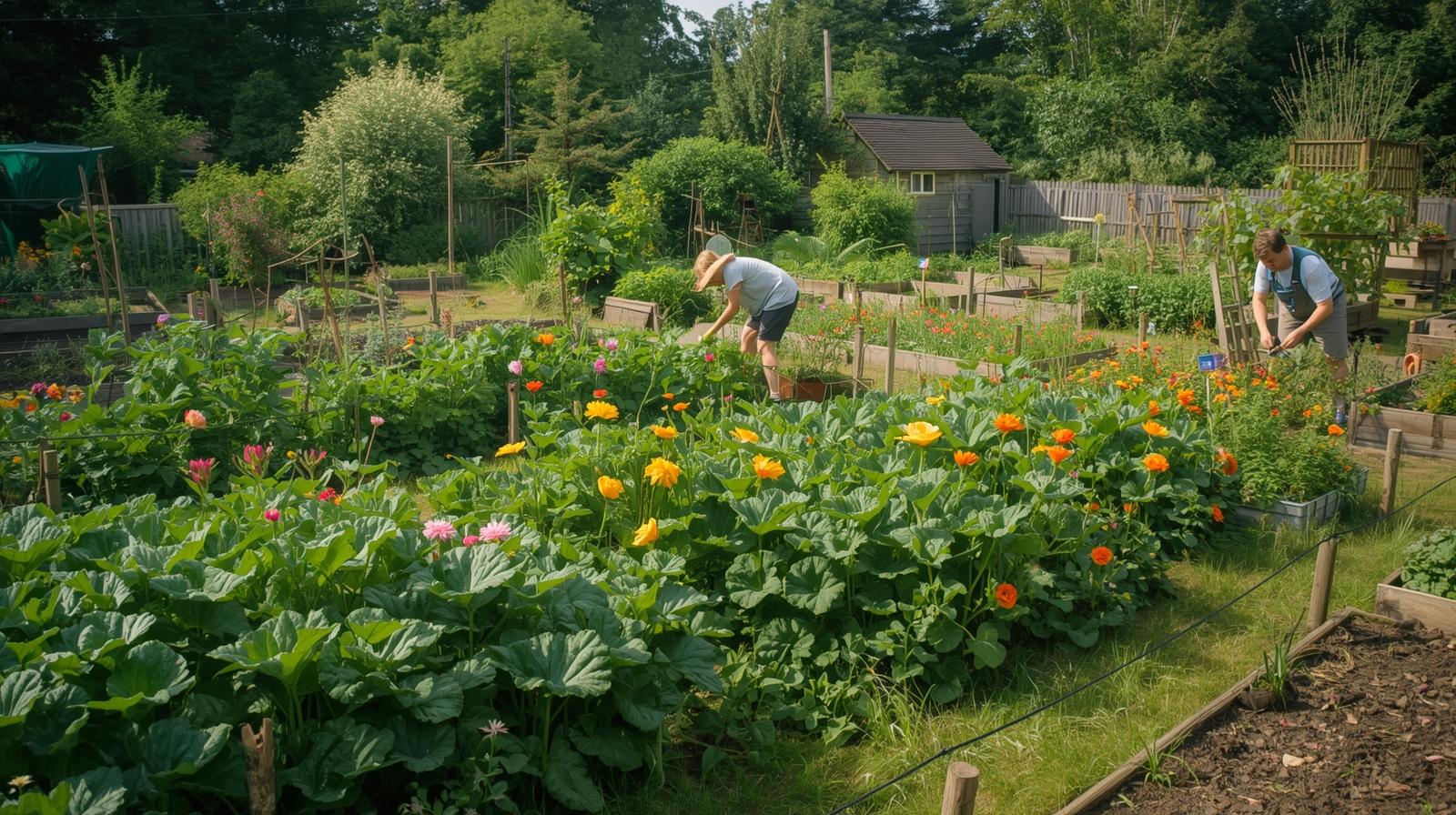
July is the height of summer and one of the most rewarding months on the allotment, this article details July allotment jobs for an allotment in the UK. The hard work of spring and early summer begins to pay off as crops ripen, flowers bloom, and harvests come thick and fast. It’s also a crucial time for maintenance — keeping on top of watering, feeding, and pest control ensures the allotment stays productive through the hottest part of the year.
Peak Harvest Season

July is when your allotment really starts to pay off. Many crops planted in spring are now ready to harvest, and picking them regularly keeps plants producing.
What to harvest:
- Vegetables: Courgettes, peas, broad beans, French beans, carrots, beetroot, onions, garlic, and early potatoes.
- Salads: Lettuce, rocket, spinach, and radishes — pick leaves often to encourage new growth.
- Fruits: Strawberries, raspberries, currants, gooseberries, and early plums.
- Herbs: Basil, mint, parsley, chives, and coriander — cutting them back encourages fresh, tender leaves.
Beginner tip: Harvest little and often. Leaving courgettes or beans too long can make them tough and stop the plant from producing more. Use a sharp knife or scissors to avoid damaging stems.
Continuous Sowing and Succession Planting

Even though many crops are already growing, July is still a great time to sow new seeds for later in the year. This keeps your allotment productive right through to autumn.
What to sow now:
- Quick crops: Lettuce, rocket, radishes, and baby carrots — these grow fast and can be harvested in a few weeks.
- Autumn and winter crops: Kale, cabbage, turnips, and beetroot can be sown now for harvesting later in the year.
- Overwintering crops: Sow spring cabbage, leeks, and spinach towards the end of July for early crops next year.
Beginner tip: Sow small amounts every couple of weeks instead of all at once. This is called succession sowing and gives you a steady supply rather than one big glut.
Watering and Feeding

July can be hot and dry, so watering is one of the most important jobs. Plants need consistent moisture to grow well and produce good crops.
Watering tips:
- Water deeply a few times a week rather than a light sprinkle every day. This encourages roots to grow deeper.
- Water early in the morning or late evening to reduce evaporation.
- Use mulch (a layer of compost, straw, or grass clippings) around plants to keep moisture in the soil.
- Focus on thirsty crops like tomatoes, cucumbers, courgettes, and beans.
Feeding tips:
- Feed fruiting plants (tomatoes, peppers, courgettes) every 7–10 days with a high-potash fertiliser or homemade comfrey tea.
- Leafy crops like lettuce and spinach benefit from a nitrogen-rich feed to keep them growing.
Beginner tip: If leaves start turning yellow or growth slows, your plants may need more nutrients. Regular feeding keeps them strong and productive.
Pest and Disease Management

Warm weather means pests and diseases can spread quickly, so regular checks are essential.
Common problems in July:
- Slugs and snails: Hide under leaves and mulch — remove them by hand or use organic pellets.
- Aphids (greenfly): Found on soft new growth — squash them gently or spray with a mix of water and a drop of washing-up liquid.
- Cabbage white butterflies: Lay eggs on brassicas (cabbage, kale, broccoli). Check leaves and remove eggs or caterpillars.
- Powdery mildew: A white coating on leaves, often caused by dryness — water regularly and remove affected leaves.
Beginner tip: Walk around your plot every few days and look closely at your plants. Catching problems early makes them much easier to manage.
General Maintenance and Plot Care

Keeping your allotment tidy and organised helps plants grow better and makes gardening more enjoyable.
Tasks to focus on:
- Weeding: Pull weeds regularly before they flower and spread seeds. Weeds compete with your crops for water and nutrients.
- Staking: Tie up tall plants like tomatoes, beans, and peas to prevent them from falling over.
- Trimming and tidying: Cut back overgrown paths and edges to keep the plot neat and easy to move around.
- Composting: Add weeds (without seeds), vegetable peelings, and grass cuttings to your compost heap. Turn it occasionally to help it break down faster.
Beginner tip: Spend a few minutes each visit doing small jobs — it’s easier than letting things build up
Greenhouse and Polytunnel Management

If you have a greenhouse or polytunnel, July can get very hot inside, so ventilation and watering are key.
Tasks to do:
- Open vents and doors during the day to prevent overheating.
- Dampen paths or floors to increase humidity and keep plants cool.
- Water container plants daily, as pots dry out quickly in the heat.
- Feed tomatoes and cucumbers weekly to support heavy fruiting.
- Pinch out tomato side shoots (the small shoots that grow between the main stem and leaves) to focus energy on fruit.
Beginner tip: Keep an eye on temperature — if it feels too hot for you, it’s too hot for your plants.
Planning Ahead

Even though July is busy with harvesting, it’s also time to think about what comes next.
Things to plan:
- Prepare beds for late-season crops by clearing finished plants and adding compost.
- Order seeds for autumn and winter sowing, such as spinach, pak choi, and winter lettuce.
- Think about crop rotation — avoid planting the same type of crop in the same bed next year to prevent soil diseases.
- Start planning green manures (plants like clover or mustard) to sow later in the year to improve soil health.
Beginner tip: Keep a notebook or take photos of your plot each month. It helps you remember what worked well and what to change next year.
Conclusion
July is a month of abundance and activity on the allotment. It’s the time to harvest generously, sow new crops, and care for your plants through the heat of summer. For beginners, it’s a chance to learn by observing how plants respond to water, sun, and care. With regular attention and a bit of planning, your allotment will stay healthy, productive, and full of life right through to autumn.
What to Read Next
- August Allotment Jobs (Next Month)
- Allotment Jobs Month by Month
- Your First Allotment
- Allotment Basics
Want to stay ahead of the seasons? Subscribe to get each month’s allotment tasks delivered straight to your inbox so you never miss a thing.
Leave a Reply