
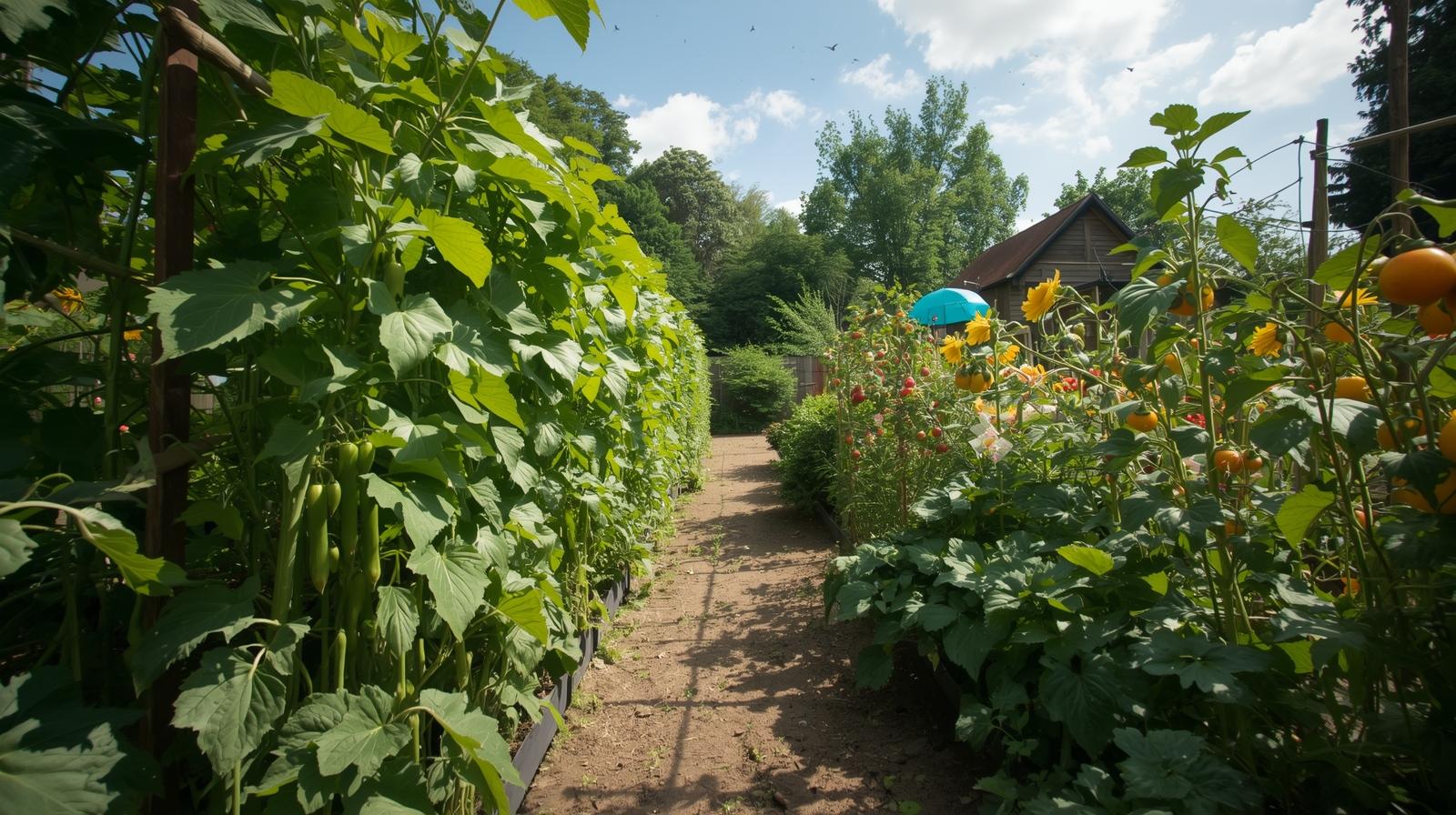
June is one of the most active and rewarding months on a UK allotment and there are plenty of June allotment jobs to complete. The days are long, the soil is warm, and plants are growing rapidly. For beginners, this is the time to nurture young crops, sow successions, and start harvesting the first rewards of the season. Staying organised and consistent with watering, weeding, and feeding will make a huge difference to the success of the allotment.
Watering and Moisture Management

Warm weather and long daylight hours mean soil can dry out quickly. Consistent watering is vital for healthy growth and good yields.
- When to water: Early morning or late evening to reduce evaporation.
- How to water: Water deeply once or twice a week rather than little and often. This encourages deep root growth.
- Mulching: Apply a 5–8 cm layer of compost, straw, or grass clippings around plants to retain moisture and suppress weeds.
- Rainwater collection: Use water butts to collect rainwater, which is better for plants than tap water.
Tip: Tomatoes, courgettes, and cucumbers are particularly sensitive to irregular watering, which can cause fruit splitting or blossom end rot.
Weeding and Soil Care

Weeds thrive in June’s warmth and can quickly take over.
- Hoeing: Use a sharp hoe on dry days to slice off weeds at the surface.
- Hand weeding: Pull weeds close to crops to avoid disturbing roots.
- Mulching: Keeps weeds down and improves soil structure.
- Soil aeration: Lightly fork compacted areas to improve drainage and oxygen flow.
Healthy soil supports strong plant growth and reduces pest and disease problems.
Feeding and Fertilising

Fast-growing crops need regular feeding to sustain their energy.
- Leafy crops (lettuce, spinach, kale): Use a nitrogen-rich feed to encourage leaf growth.
- Fruiting crops (tomatoes, peppers, courgettes): Use a high-potassium feed once flowers appear.
- Root crops (carrots, beetroot, parsnips): Avoid high-nitrogen feeds, which cause excessive leaf growth.
Apply liquid feeds every 10–14 days and water well afterward.
Supporting and Training Plants

Many crops need support as they grow taller or start to fruit.
- Tomatoes: Tie stems to canes and remove side shoots on cordon varieties.
- Peas and beans: Use netting, canes, or string supports.
- Cucumbers and squashes: Train climbing varieties up trellises to save space.
- Sweetcorn: Earth up around the base of plants to strengthen stems.
Check ties regularly and loosen them as plants thicken.
Pest and Disease Management

June’s warmth brings pests and diseases. Regular inspection is key.
- Slugs and snails: Use beer traps, copper tape, or hand-pick at dusk.
- Aphids: Spray with a mild soap solution or encourage ladybirds.
- Cabbage white butterflies: Cover brassicas with fine mesh netting.
- Fungal diseases: Improve airflow by spacing plants well and watering at the base, not on leaves.
Remove any diseased leaves immediately and compost only healthy plant material.
What to Sow in June
une is ideal for both sowing new crops and planting out tender seedlings. The key is to choose varieties that thrive in warm soil and can mature before the cooler months arrive.
Direct Sowing Outdoors
These crops can be sown straight into the ground now that the risk of frost has passed.
Salad Crops
- Lettuce: Sow small amounts every 2–3 weeks for a continuous supply. Choose heat-tolerant varieties like ‘Little Gem’ or ‘Salad Bowl’.
- Rocket and Mizuna: Quick-growing and perfect for cut-and-come-again harvesting.
- Radishes: Sow thinly in shallow drills; they’ll be ready in 3–4 weeks.
- Spring Onions: Sow in rows for harvesting later in summer.
Root Vegetables
- Carrots: Sow maincrop varieties such as ‘Autumn King’ or ‘Nantes’. Cover with fleece to protect from carrot fly.
- Beetroot: Sow every few weeks for a steady harvest. ‘Boltardy’ is a reliable variety that resists bolting.
- Turnips: Sow for small, tender roots in about 6–8 weeks.
- Parsnips: If you didn’t sow earlier, you can still sow now for a late autumn harvest.
Legumes (Beans and Peas)
- French Beans: Sow directly into the soil now it’s warm. Dwarf varieties like ‘Safari’ are great for small spaces.
- Runner Beans: Sow in blocks or rows with sturdy supports. Keep soil moist for good germination.
- Peas: Sow maincrop varieties for harvesting in late summer. Protect from birds with netting.
Leafy Greens
- Spinach: Choose bolt-resistant varieties such as ‘Perpetual Spinach’. Keep soil moist to prevent bolting.
- Chard: Sow rainbow or green varieties for colourful, long-lasting leaves.
- Kale: Sow now for planting out in July and harvesting through winter.
Sweetcorn
- Sow in blocks (not rows) to ensure good pollination. Each plant produces one or two cobs. Keep well-watered and feed regularly.
Herbs
- Basil: Prefers warm, sheltered spots or a greenhouse.
- Coriander: Sow little and often for fresh leaves.
- Dill and Parsley: Sow directly into moist soil; thin seedlings as they grow.
Planting Out Seedlings
If you’ve raised plants indoors or bought young plants, June is the time to harden them off and move them outside.
Tender Crops
- Tomatoes: Plant in a sunny, sheltered spot or greenhouse. Stake and tie in as they grow.
- Courgettes and Marrows: Space about 90 cm apart. Keep soil rich and moist.
- Pumpkins and Squash: Plant in well-composted soil with plenty of space to sprawl.
- Cucumbers: Outdoor varieties like ‘Marketmore’ do well in sunny, sheltered areas.
Brassicas (for Autumn and Winter)
- Cabbage: Plant out summer and autumn varieties. Firm soil around the base to prevent wind rock.
- Broccoli and Cauliflower: Plant under fine mesh to protect from cabbage white butterflies.
- Brussels Sprouts: Plant in firm soil and stake tall varieties for support.
Leeks
- Transplant seedlings into deep holes about 15 cm apart. Water well and don’t fill the holes with soil—let rain do that gradually.
Celery and Celeriac
- Plant out in rich, moist soil. Keep well-watered throughout summer.
Under Cover (Greenhouse or Polytunnel)
Warm, protected environments allow for extended sowing and faster growth.
- Tomatoes: Continue planting and start feeding once flowers appear.
- Peppers and Chillies: Pot on into larger containers and keep in full sun.
- Aubergines: Plant into large pots or grow bags; they need warmth and regular feeding.
- Cucumbers: Train up strings or canes to save space.
- Melons: Sow or plant out in a warm, sunny spot under cover.
Succession Sowing
To keep your allotment productive all summer, sow small batches of quick-growing crops every few weeks.
Good choices for succession sowing include:
- Lettuce
- Radishes
- Beetroot
- Carrots
- Spinach
- Spring onions
- French beans
This approach ensures a steady supply of fresh produce rather than one large glut.
Flowers for Pollinators and Companions
Encouraging pollinators improves yields and helps deter pests naturally.
- Marigolds: Repel aphids and attract beneficial insects.
- Nasturtiums: Attract blackfly away from beans.
- Calendula (Pot Marigold): Attracts hoverflies and bees.
- Borage: Excellent for bees and adds nutrients to compost when dug in later.
What to Harvest in June

June brings the first real taste of the season’s efforts. Harvest regularly to encourage continued production.
Vegetables:
- Early potatoes
- Broad beans
- Peas
- Lettuce and salad leaves
- Spinach and chard
- Radishes
- Spring onions
- Beetroot (young roots and leaves)
- Carrots (early varieties)
- Garlic (if leaves begin to yellow)
- Rhubarb (final harvests before letting plants rest)
Fruits:
- Strawberries (pick frequently to prevent rot)
- Gooseberries (for cooking or eating fresh)
- Early raspberries
- Currants (red, white, and black)
Herbs:
- Mint, chives, parsley, thyme, and oregano are at their best. Regular cutting encourages new growth.
Greenhouse and Polytunnel Care
- Ventilation: Open vents and doors daily to prevent overheating.
- Shading: Use shade netting or whitewash to protect plants from scorching.
- Watering: Keep soil moist and damp down floors to increase humidity for cucumbers and tomatoes.
- Feeding: Start feeding tomatoes weekly once the first truss sets fruit.
Composting and Waste Management

- Add grass clippings, weeds (without seeds), and vegetable waste to the compost heap.
- Mix green (moist) and brown (dry) materials for balance.
- Turn the heap every few weeks to speed decomposition.
- Keep compost moist but not soggy.
By late summer, this compost will be ready to enrich beds for autumn planting.
Planning Ahead
June is the time to think ahead to late summer and autumn.
- Prepare beds for brassicas and leeks.
- Order seeds for autumn crops like turnips, swedes, and winter lettuce.
- Plan crop rotations to maintain soil fertility and reduce disease risk.
- Keep notes on what’s growing well and what needs improvement for next year.
Conclusion
June is a month of balance—between nurturing young plants and reaping early rewards. Consistent watering, feeding, and weeding are the foundations of success. With careful attention to sowing, harvesting, and pest control, even beginners can enjoy a thriving, productive allotment that continues to yield through summer and beyond.
What to Read Next
- July Allotment Jobs (Next Month)
- Allotment Jobs Month by Month
- Vegetable Growing
- DIY Allotment Projects
Want to stay ahead of the seasons? Subscribe to get each month’s allotment tasks delivered straight to your inbox so you never miss a thing.
Leave a Reply