
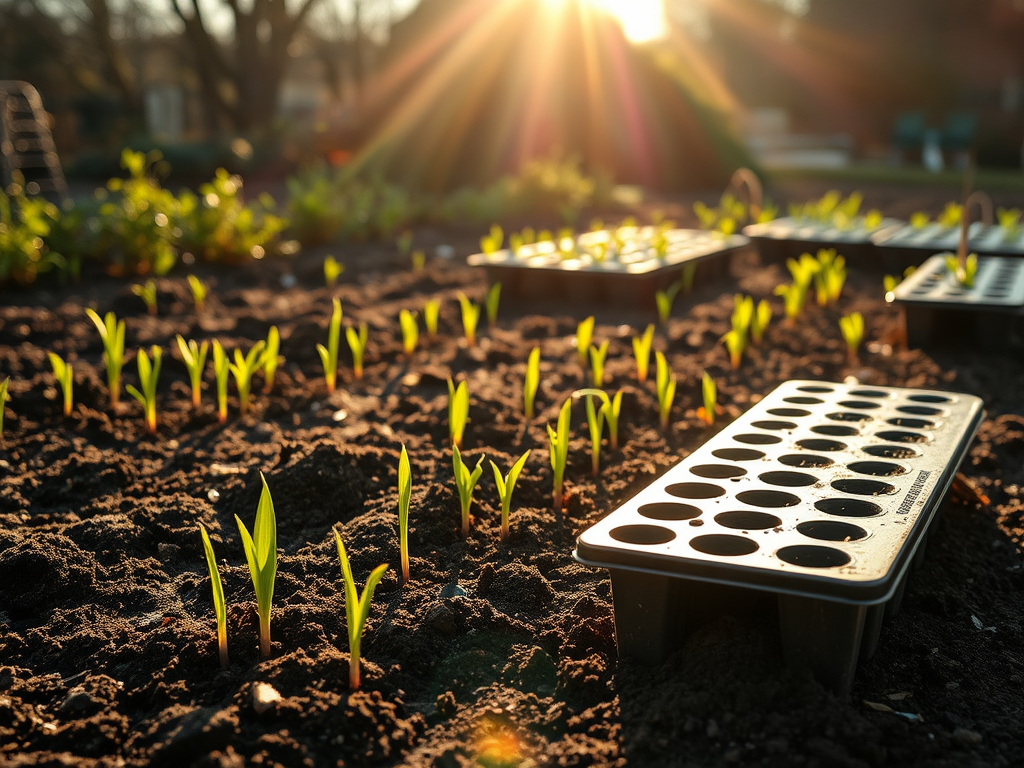
March is when the UK allotment year truly begins and there are plenty of March allotment jobs to keep you busy! The days are longer, the soil begins to warm up, and many vegetable crops are ready to be sown or planted. For beginners, March can feel like a rush of activity—but with a clear plan, it becomes one of the most rewarding months on the allotment.
This guide breaks down the March allotment jobs, offering detailed advice on soil preparation, sowing, planting, greenhouse work, pruning, pest control, and planning ahead. Each section is tailored to beginners who want practical, step-by-step support.
Prepare Your Soil for Spring Planting

Healthy soil is the foundation of a productive allotment. March is the ideal month to prepare beds before sowing and planting gets fully underway.
Clear Winter Debris and Weeds
- Remove dead plant material, rotting stems, and fallen leaves that harbour slugs and fungal spores.
- Pull out perennial weeds such as dock, nettles, or dandelions—ideally with a weed fork to remove the entire root.
- Annual weeds should be hoed on a dry day so they shrivel on the soil surface.
Improve Soil Structure
Adding organic matter boosts fertility, moisture retention, and soil texture.
- Spread 5–7cm of compost, well-rotted manure, or leaf mould over beds.
- No-dig gardeners can simply mulch and avoid disturbing the soil.
- If digging, turn the soil gently to avoid destroying soil organisms.
Warm the Soil for Early Sowing
Cold, wet soil slows germination. You can warm beds by:
- Covering them with black plastic, polythene sheets, or horticultural fleece.
- Using cloches over planned sowing rows.
- Creating a “stale seedbed” to reduce weed pressure later.
Prepare a Fine Tilth for Seed Beds
For direct sowing later in March:
- Rake the soil until it is fine and crumbly.
- Remove stones and large clumps.
- Avoid digging when soil sticks to your boots—this means it is still too wet.
Early Sowing Indoors or Under Cover

Indoor sowing in March gives plants a head start, especially in the UK’s unpredictable spring weather.
Recommended Seeds to Start Indoors
Warm-loving crops:
- Tomatoes – Sow early to ensure a long growing season.
- Peppers and chillies – Slow-growing crops that need warmth.
- Aubergines – Best started under heat and grown in greenhouses or warm patios.
Cooler-season crops:
- Cabbage, kale, cauliflower, broccoli – Stronger plants when started indoors.
- Leeks – Start now for planting out in early summer.
- Celery and celeriac – Germinate slowly and love steady warmth.
Flowers for pollinators:
- Sweet peas – Sow in deep pots for strong root development.
Sowing Techniques for Beginners
- Use seed compost, not garden soil, to avoid disease.
- Sow seeds thinly—overcrowded seedlings become weak.
- Place trays on a sunny windowsill, heated propagator, or in a greenhouse.
- Turn trays daily so seedlings receive even light.
- Water from below using a tray to avoid waterlogging the surface.
- Ventilate greenhouses on warm days to prevent fungal issues.
When to Pot Up
Once seedlings have two true leaves, transplant them into individual pots to encourage stronger root development.
Direct Sowing Outdoors (Weather Permitting)

By mid–late March, hardy vegetables can be sown outdoors, especially in southern or sheltered parts of the UK.
Hardy Crops to Sow Outside
- Broad beans – Tough plants that tolerate frost.
- Peas – Early varieties such as Meteor or Kelvedon Wonder.
- Parsnips – Only sow fresh seed for reliable germination.
- Carrots – Prefer sandy, stone-free soil.
- Beetroot – Ideal for early, small roots.
- Spinach & chard – Cold-tolerant leafy crops.
- Radish and spring onions – Fast-growing salad essentials.
How to Sow Outdoors Successfully
- Wait until soil is at least 7°C—use a cheap soil thermometer if unsure.
- Loosen the soil to a depth of 15–20cm.
- Mark rows using string to keep things neat.
- Water the drill before sowing if soil is dry.
- Cover rows with fleece to speed up germination and protect from pests.
Tips for Tricky Crops
- Parsnips: Sow 3 seeds per station and thin to the strongest plant.
- Carrots: Avoid fresh manure or you’ll get forked roots.
Planting Potatoes (Early Varieties)

March is peak time to plant first early potatoes, giving you delicious new potatoes by June.
How to Plant Potatoes Step-by-Step
- Chit potatoes beforehand to encourage strong shoots (keep in a light, cool room).
- Dig trenches 10–15cm deep.
- Space tubers 30cm apart with eyes facing up.
- Space rows 60cm apart.
- Backfill the trench and lightly firm the soil.
- When shoots reach 10cm, earth them up to protect from frost.
Feeding and Soil Tips
- Potatoes enjoy nutrient-rich soil—mix in compost before planting.
- Avoid waterlogged areas.
- Mulch with grass clippings or straw to retain moisture.
Plant Onion Sets & Garlic

March is your second window for planting alliums.
Onions & Shallots
- Choose firm, disease-free sets.
- Plant with the tip just above the soil surface.
- Space onions 10cm apart; shallots 20–25cm.
- Net the area—birds love pulling them out.
Garlic (Spring Varieties)
If you missed autumn planting, choose a spring variety like Casablanca.
- Split bulbs into cloves.
- Plant 5cm deep, 15cm apart.
- Mulch to suppress weeds and retain moisture.
Common Problems
- Rotting onions indicate poor drainage—raise beds if needed.
- Rust appears later in summer; ensure good spacing for airflow.
Pruning & Perennial Care

March is the final chance to prune many fruit crops before growth surges.
Prune Currants & Gooseberries
- Remove dead, crossing, or weak branches.
- Open up the centre to create a goblet shape—encourages airflow and reduces mildew.
- Shorten last year’s growth on gooseberries to 3–5 buds.
Care for Strawberries
- Remove old, brown leaves that harbour disease.
- Mulch with straw, woodchip, or black membrane.
- Apply a high-potassium feed to support flower and fruit development.
Rhubarb
- Remove any flower stalks immediately—they sap plant energy.
- Feed with compost and mulch thickly.
- For early stems, cover crowns with a rhubarb forcer or bucket.
Fruit Trees
- Finish pruning apples and pears early in the month if needed.
- Do not prune stone fruits (plums, cherries) in March—wait until summer.
Greenhouse, Shed & Tool Maintenance

Getting organised now saves time later in the season.
Deep Clean Your Greenhouse
- Wash glass inside and out to maximise light.
- Disinfect shelving, pots, and seed trays.
- Replace any broken panes and check for gaps where pests can enter.
Ventilation & Temperature Control
- Open vents on warm days to prevent seedlings getting leggy.
- Close vents early evening to retain heat overnight.
Tool Maintenance
- Sharpen hoes, spades, and secateurs for clean cuts.
- Oil wooden handles to prevent cracking.
- Ensure water butts are connected for the season ahead.
Set Up Garden Structures & Supports

Putting structures in place now means plants grow into them naturally.
Supports to Install in March
- Pea supports: twiggy branches, netting, or wire mesh.
- Bean poles: tall and sturdy; form wigwams or rows.
- Fruit netting: protect buds from birds early.
- Brassica cages: essential for pigeons and cabbage white butterflies.
Why Install Early?
- Avoid disturbing roots later.
- Ensure supports are stable before windier spring weather arrives.
- Makes the plot more organised and easier to maintain.
Controlling Early Weeds & Pests

As temperatures rise, so do pest and weed problems.
Weed Control
- Hoe on sunny days so weeds die quickly.
- Mulch bare soil with compost or cardboard to prevent new growth.
- Avoid letting weeds seed—they spread rapidly in spring.
Early Pest Problems
- Slugs & snails:
- Use organic pellets, beer traps, or wool pellets around new seedlings.
- Pigeons:
- Net all brassicas and young peas.
- Aphids:
- Check inside greenhouses and remove early colonies by hand or with water spray.
Planning Ahead for April
The work you do in March sets the tone for next month.
What to Prepare For Next Month
- More direct sowing (lettuce, beetroot, carrots).
- Sowing courgettes, pumpkins, marrows, and runner beans indoors.
- Harden off seedlings by gradually exposing them to outdoor temperatures.
- Planting maincrop potatoes.
- Installing irrigation or soaker hoses before the weather warms.
Why Planning Matters for Beginners
March can feel manageable, but April becomes significantly busier. Preparing now ensures you avoid feeling overwhelmed later.
March is one of the most essential months on the allotment, particularly for beginners. With soil preparation, early sowing, planting first earlies, pruning fruit, building supports, and monitoring pests, you set the foundation for a successful growing year.
By pacing your tasks and using this guide as a checklist, you’ll enter April confident, organised, and on track for your most productive growing season yet.
What to Read Next
Want to stay ahead of the seasons? Subscribe to get each month’s allotment tasks delivered straight to your inbox so you never miss a thing.
Leave a Reply